Welgemoed hangs its living rooms three hundred metres up the Tygerberg and points them at the horizon. This guide is about what that choice does to the light in your rooms — season by season, wall by wall — and which shading genuinely earns its keep on each one. No sign-up, no sales script, trade-offs given straight.
Welgemoed & the northern-suburb slopes~12–15 minute readNo sign-up to read
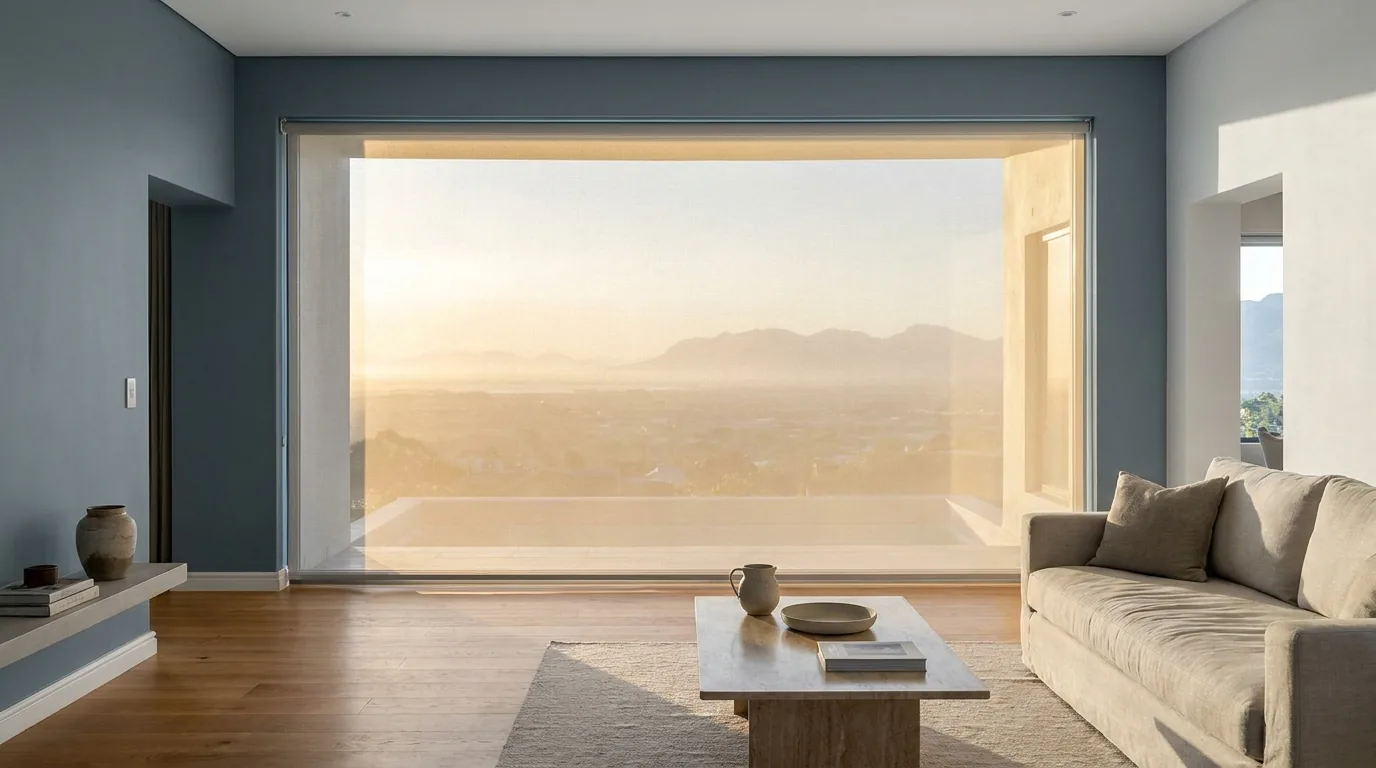
Late afternoon on the slope — the hour the west sun turns hostile, and the reason a plain blackout is the wrong reflex.
Short on time? Grab the PDF and come back to it — 15 pages.
Start with a number: 310 metres. That’s roughly how high Welgemoed sits on the Tygerberg’s northern slopes — the highest suburb in Cape Town — and it explains almost everything about shading a house here. Height buys the outlook over Bellville and the Flats. The outlook demands glass, lots of it, aimed straight at it. And unshaded glass at altitude, facing the afternoon, is a heat engine for four months of the year.
The reflex answer — blockout everything — works, technically. It also amputates the one thing that makes these houses worth their price. So the useful question isn’t “which blind?” It’s “which wall, which hour, which trade-off?” That’s how this guide is built: the sun’s geometry first, then each elevation, then the products — each with the case against it stated as plainly as the case for.
The geometry, in three facts
Everything else in this guide follows from these.
Fact one: the midday sun lives in the north. At Cape Town’s latitude — about 34° south — noon light always comes from the northern sky. North-facing rooms are the bright ones, all year. (The figures here are calculated from that latitude, not lifted from a brochure.)
Fact two: the angle swings wildly with the season. A late-December noon sun stands at roughly 80° — near enough vertical that an ordinary eave shades north glass without any help. By June it has sagged to around 33°, low enough to pour deep into a north room. On a slope with wet, grey winters, that low winter sun is free heating. Shade it permanently and you’ll regret it in July.
Fact three: no eave can save the west. From about three in the afternoon, the summer sun comes in sideways — under any overhang, at eye level, straight through the biggest view glass in the house. Add a UV index that holds between 11 and 14 (officially “extreme”) from October to March, and that daily broadside is glare, heat and upholstery-fade arriving together. Only something at the glass itself can stop it. Most of this guide is, one way or another, about that.
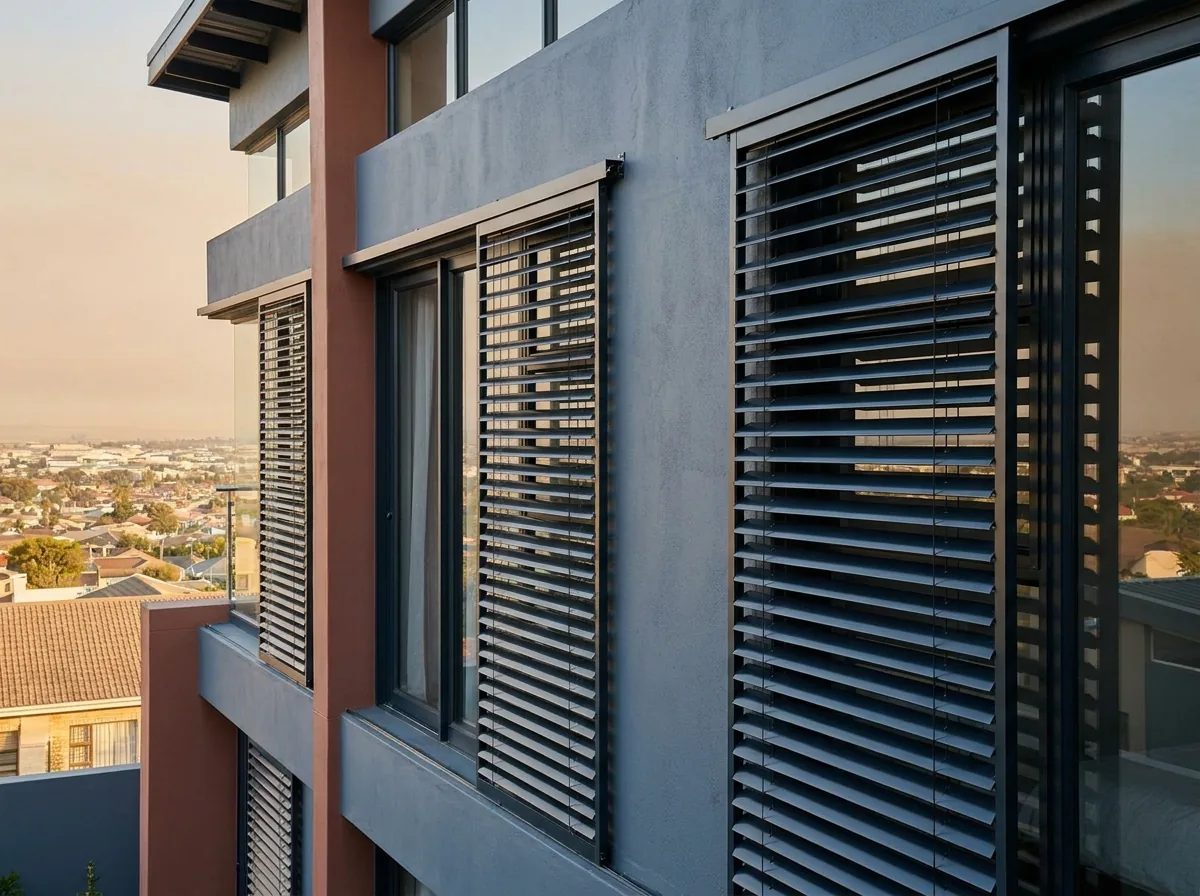
The principle in one photo: intercept the sun on the outside of the pane, tilt the slats, keep the light without the heat.
Four walls, four different problems
Read this holding your own floor plan in your head — one of these is your difficult window.
West Start here
The wall that hurts. Sideways sun from mid-afternoon to sunset in summer, usually through the largest glass in the house. External shading — stopping the load before the pane — is the real fix; anything interior is damage control, honest but second-best.
North Manage, don’t block
All-day light, but well-mannered: steep and eave-shaded in summer, low and warming in winter. This wall wants something adjustable — a sunscreen roller, a tiltable slat — never a permanent blackout that throws July’s free heat away with January’s glare.
East A one-hour problem
Sunrise arrives hard and early into bedrooms, then the wall goes quiet by mid-morning. Heat load is trivial; sleep is the whole brief. A blockout — or a day/night if the window also owns a view — settles it, interior all the way.
South Think damp, not sun
The forgotten wall. Barely any direct sun, the least airflow, and the most winter condensation on a slope that takes the north-west fronts head-on. Specify for moisture here — wipeable slats over absorbent fabric — and the mildew argument never starts.
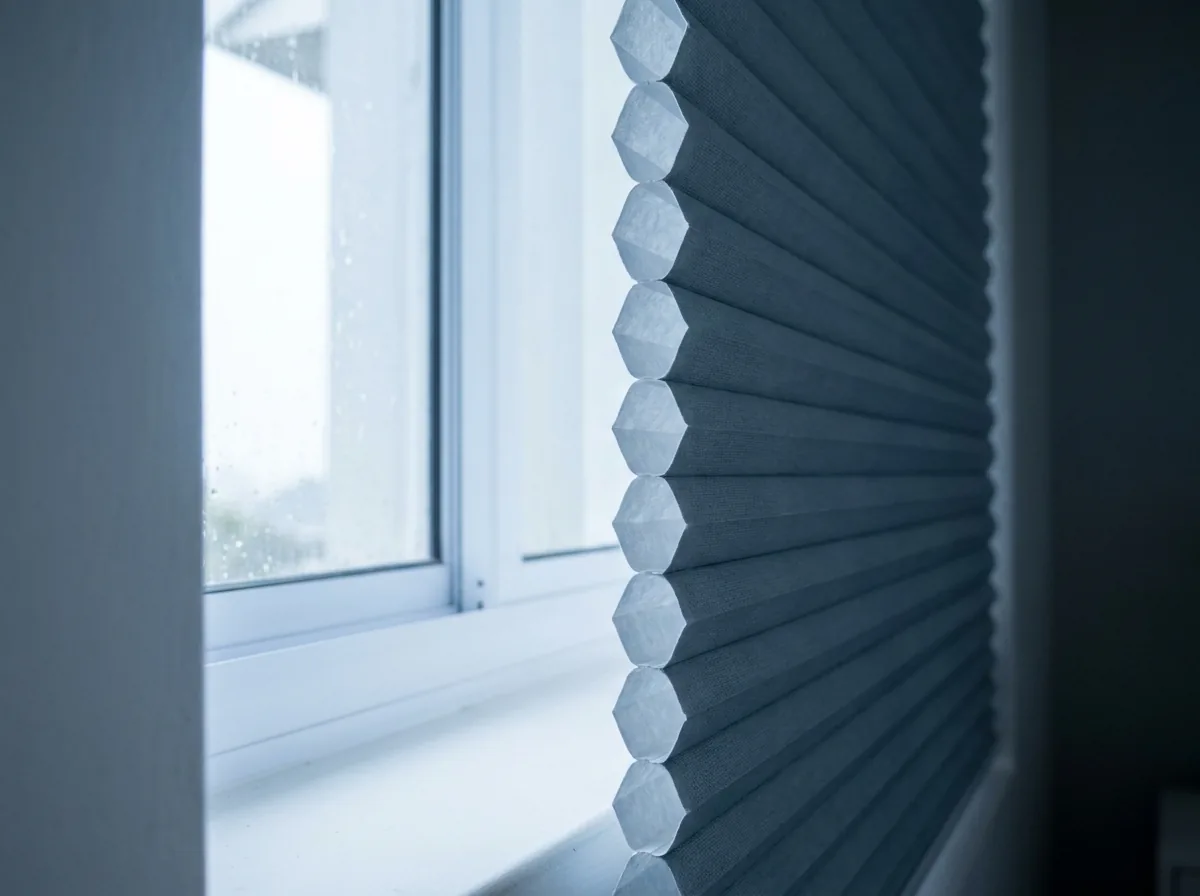
Trapped air is the whole trick — the cell profile that makes honeycomb the range’s warmest blind is also why a permanently damp room should get something wipeable instead.
The shortlist, argued both ways
Ten products, each pitched for the Welgemoed situation it wins — with the counter-argument printed right under it, because half of good specification is knowing when the cheaper thing is correct. Tap “add to my list” on anything that fits and it rides down to the enquiry at the foot of the page, no retyping.
The west wall · stopping heat before the glass
External venetians: the proper fix for the afternoon broadside
Physics does the arguing here. Heat intercepted outside the pane never enters the room; heat absorbed by an interior blind already has. On open western glass, tiltable external slats cut the load at the source and still let you angle the view back in — a cool lounge that stays a view lounge.
Against it: it’s the expensive route, the install is real building work, and on this wind-blasted slope it isn’t optional to add the sensor that stows the slats when the south-easter climbs. A west window already sheltered by a deep eave, a boundary wall or a big tree doesn’t need any of that — an interior roller there is the intelligent saving.
The most punished window in the house
Roller shutters: the blunt instrument, used sparingly
Some rooms don’t need finesse — they need the sun switched off. For the one window that bakes relentlessly every February afternoon, an exterior shutter rolling down from a slim headbox is the heaviest shading we fit: total interception, outside the glass, on demand, sitting quietly on the facade the rest of the time.
Shading, not security. These are shading shutters — made for sun, heat, glare and light control on the outside of the glass. They are not security-rated shutters; that is a different product we can quote on request.
Against it: down means dark — a closed shutter takes the view and the daylight with the heat, which makes it an on-demand tool rather than an all-day companion. Estate and body-corporate pockets may also want the external colour and profile approved first. If keeping the outlook is the point, the venetian above or the sunscreen below serves the everyday hours better.
Everyday view glass · the default answer
Sunscreen rollers: keep the outlook, lose the glare
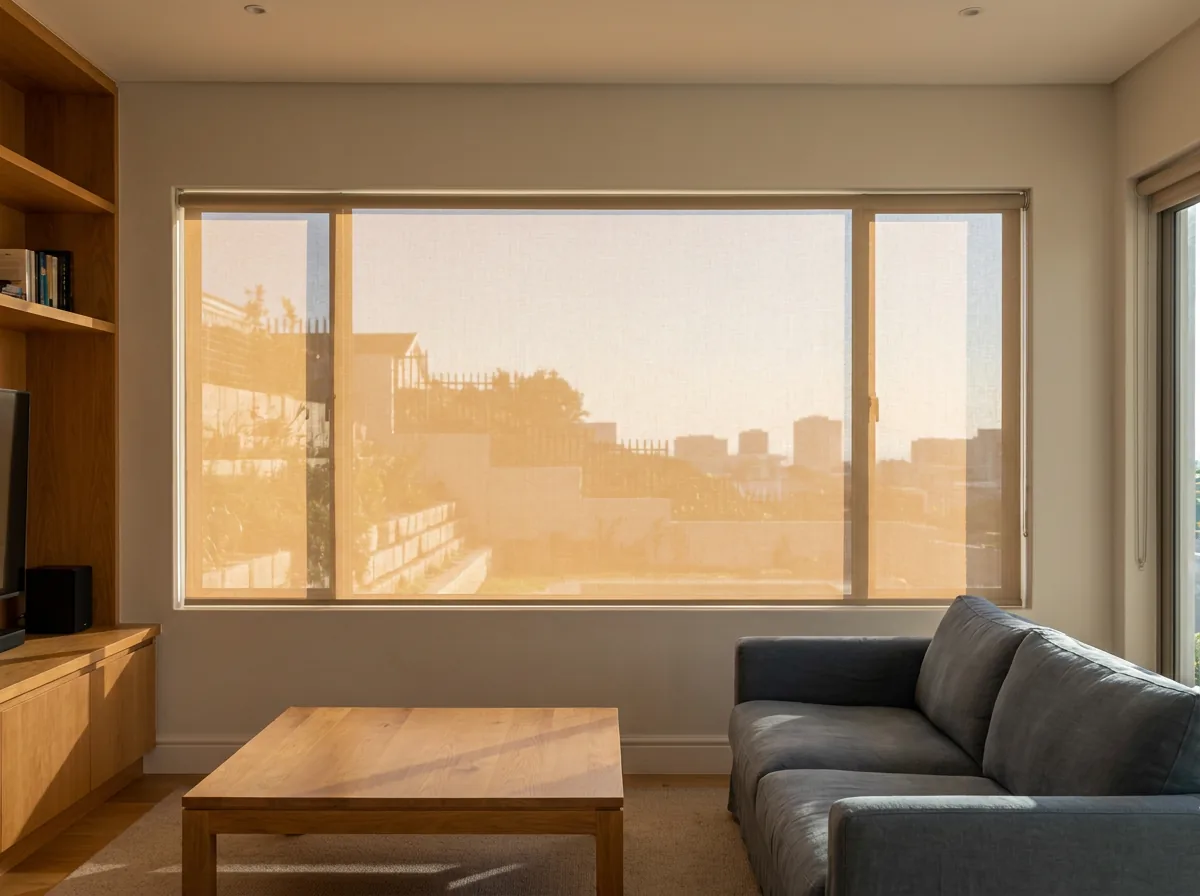
Most of the glass in a Welgemoed lounge exists for one reason — the picture out of it. A mesh weave at 3–5% openness respects that: glare drops, the extreme-band summer UV mostly stops at the fabric, and the slope below stays visible as a softened image. Choosing blockout for a daytime living room here solves a problem you don’t have by creating one you do.
Against it: mesh privacy is a daylight arrangement. Come evening, the bright side swaps — a lit room behind a sunscreen reads clearly from a dark garden or the road above. Overlooked windows want a solid second layer, which is precisely the day/night’s brief, one card down.
Overlooked windows · one blind, two shifts
Day/night blinds for the slope’s privacy problem
Building on a hillside means someone is nearly always higher than you — the street above, the neighbour’s stoep, the next terrace up. A day/night blind runs alternating sheer and solid bands on a single tube: bands aligned, the view filters through by day; bands offset, the window goes effectively solid for the evening. Two jobs, one bracket, no second blind crowding the reveal.
Against it: you’re paying for the second fabric. A window nobody can see into after dark — facing your own garden, or straight out over the valley — gets everything it needs from a plain sunscreen at a friendlier price.
Bedrooms & studies · the comfort engineer
Honeycomb blinds, where a still layer of air earns its keep
The pleated cells hold a cushion of trapped air against the glass, and that cushion works both directions — blunting a 27°C February afternoon and taking the bite out of a damp June morning better than any flat fabric can. Order it with a blockout cell and a bedroom gets proper darkness and the best insulation in the range from the same blind.
Against it: fabric cells and standing damp are a bad marriage. In the low-airflow south rooms where winter condensation lingers, the cells can hold moisture and eventually mildew — that specific room is aluminium-venetian territory (next card), where wipeable beats warm.
The wet-winter rooms · bathrooms, south walls, kitchens
Venetians, twice: aluminium for the damp, timber for the dry
One mechanism, two materials, opposite postings. Aluminium slats are the wet-room specialists — steam, condensation and the south wall’s winter damp wipe straight off, and the tilt still gives you light and privacy by degree. Timber is the same idea promoted to the living room: wide warm slats that suit an established Welgemoed home, in the rooms that stay dry enough to deserve them.
Against it: neither is an insulator — honeycomb beats both handily on warmth, and narrow aluminium can look office-like in a soft room. And never send the timber where the aluminium belongs: in genuine damp it swells, marks and grieves. Room by room, not whole-house.
The terrace at midday · shade you can put away
Folding-arm awnings, for the Sunday-lunch hours
A terrace with that outlook was built for long lunches, and a folding-arm awning is what keeps them going past noon in February — metres of overhead shade cranked or motored out over the whole table, then folded flat against the wall when the winter sun becomes the guest of honour again.
Against it: overhead is all it does. The low side-on evening sun ducks straight under it, and an extended awning in a Cape south-easter is a sail — on this exposed slope the auto-retract wind sensor is a condition of fitting, not an extra. Wind and low sun are the zip screen’s department below; the best terraces up here run both.
The deck on a gusty evening · taming the Cape Doctor
Zip screens: walls of mesh the wind can’t grab
Height is why Welgemoed has the views, and height is why it takes the summer south-easter harder than the streets below. An ordinary drop blind flogs itself to rags in that wind; a zip screen’s fabric is locked into zipped channels down both sides, so it stands taut, seals the deck against gusts, low sun and mosquitoes — and the outlook stays right there through the mesh.
Against it: it’s a vertical product. High-noon sun comes over the top of it, so a screen alone won’t shade the lunch table in December — that’s the awning’s half of the partnership above. Screens for the wind and the level sun; canvas for the overhead.
The glass no arm reaches · spans past three metres
Motorisation, where hands stop being an option
Plenty of Welgemoed glass — the double-volume walls, the wide spans facing the Bellville Golf Club fairways, anything much past three metres of fabric — is physically beyond a chain and a stretch. A motor solves the reach; the sensors solve the timing. Sun sensor: the west blinds drop themselves before the 16:00 heat, home or not. Wind sensor: the awning stows itself when the gusts pick up. Battery motors slot into a finished house; wired ones belong in a build still open.
Against it: on a normal window at shoulder height, a motor is a treat, not a tool. Spend where the physics demands it — the wide, the high, the unreachable — and let the easy windows stay simple.
Architect-drawn glass · the invisible option
Concealed rollers, for lines too clean to interrupt
Welgemoed’s newer double-storeys are drawn around their glazing — frameless corners, double-volume walls, shadow-line ceilings. Bolt a visible headbox onto that and the drawing is spoiled. The concealed roller’s answer is disappearance: the fabric drops out of a slim slot in the bulkhead, and with the blind raised the window is nothing but glass and frame, exactly as designed.
Against it: invisibility is planned, not retrofitted — the slot and the motor cabling have to exist before the ceiling closes, and a hand can’t reach into a recess, so motorisation (and its cost) comes standard. On ordinary reachable windows, a tidy surface-mounted roller shades identically for far less.
Four o’clock, tamed — the mesh turns the broadside into a glow and leaves the garden as a soft silhouette instead of a black rectangle.
One suburb, two completely different houses
The brief changes street by street here, and it pays to know which brief is yours.
The Welgemoed that grew up around the Bellville Golf Club is oaks, quiet streets and settled double-storeys — houses with deep reveals, existing pelmets and window lines that have looked right for forty years. Shading one of those is restoration work as much as fitting: the treatment slots into the architecture that’s already there, or it looks wrong forever.
Then there’s the other Welgemoed — the new double-storeys climbing the slope with entire walls of view glass. There the architecture hasn’t got window lines to respect so much as a heat-load problem to solve, and the conversation goes straight to external shading, big spans and motors.
Cutting across both: the gated pockets. Small secure enclaves — Vergezicht is one of several — often run architectural or body-corporate guidelines, and anything on the outside of the house (external venetians, shutters, awnings, zip screens) may need its colour and profile signed off. We check that before quoting, because unpicking an installed awning after a committee letter is nobody’s idea of a good month.
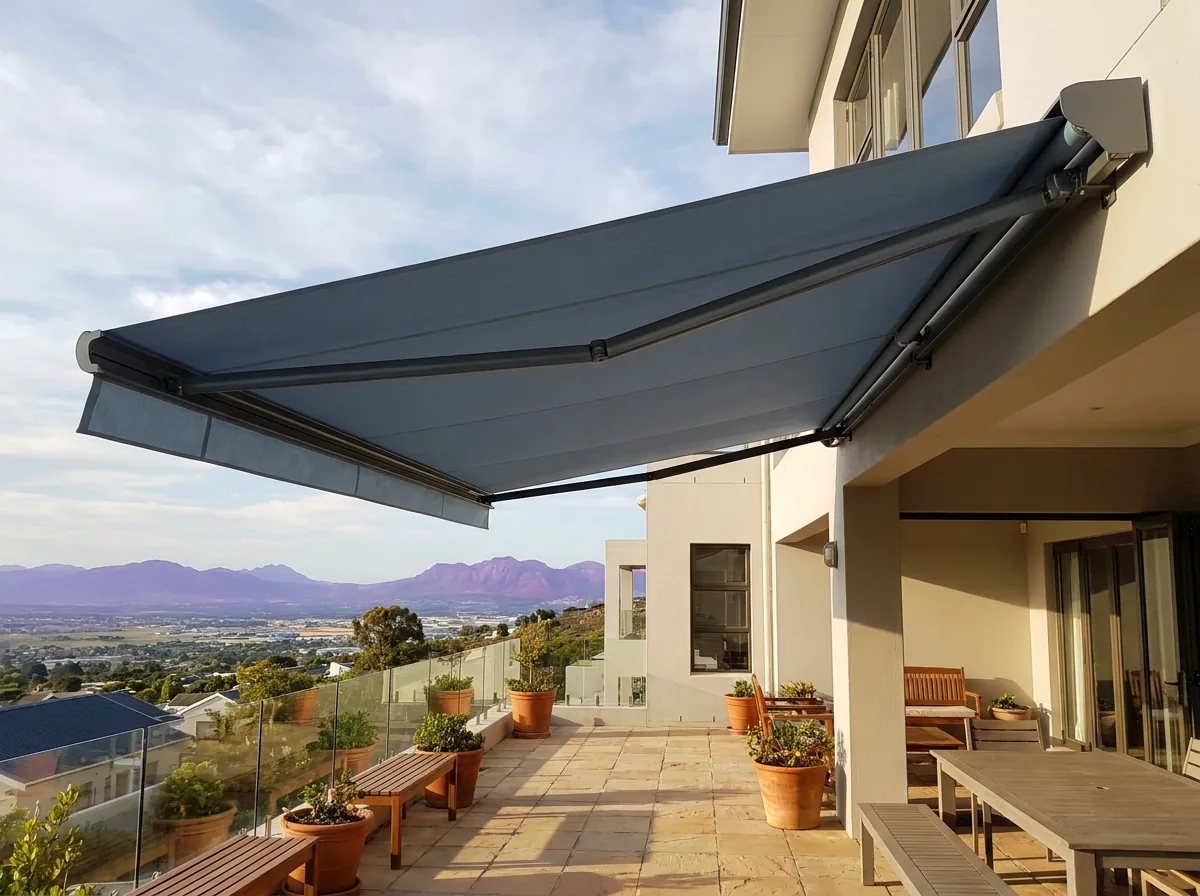
The lunch shift covered — arms out, table shaded, and the wind sensor on duty for the moment the south-easter has other ideas.
Why we still insist on standing in your house
This guide can get you to the right product. It cannot get you to the right quote — these five things only surrender to a site visit.
The wind, corner by corner. On an elevated stand the south-easter mauls one edge of the terrace and barely touches another. Which screen, which awning, which sensor threshold — that’s decided by standing in the spot, not by a satellite view of the roof.
Reveal depth, in millimetres. Inside-mount or face-fix turns on how deep each recess really is and what handles, stays or bars eat into it. The generous reveals of the older houses and the shallow plaster returns of the new builds are different worlds, window to window.
The wall under the wall. Face-brick, timber lintel, aluminium section, plasterboard bulkhead — each takes its own fixing, and for a heavy motorised blind or an external device in this wind, the anchoring is a safety matter before it’s a cosmetic one.
Where the power hides. Wired motor or rechargeable battery depends on what cabling we can actually reach — and on a new build, on what must be routed before the ceilings close. Ten minutes on site settles what a phone call never can.
What your estate will sign off. If a committee governs your external colours and profiles, we confirm the rules first, so nothing arrives on install day that has to come down again.
Pick your speed
Both routes below are free. One is faster; the other is exact.
If you think in numbers, the ballpark tool takes rough window sizes and turns them into a budget range by the next working day — no tape-measure skill required, roughly is genuinely fine. If you’d rather never touch a ladder, skip straight to the measure: a consultant does every window properly and the pricing comes back exact, per window, in writing. There’s no wrong door; the measure is simply where both routes end up.
Two doors below — the two-minute ballpark, or the measure that ends the guessing.
Choose your door
Numbers first, or tape measure first — both free
Rough sizes in the left column get you a budget range by the next working day. The right column skips the arithmetic entirely: a consultant measures every window and the pricing comes back exact and in writing. Anything you added to your list above is already waiting in both.
Optional · about two minutes
Your ballpark
A row per window, sizes as close as you can guess, product from the shortlist above — that’s enough for a budget range (not a fixed quote). If paper suits you better, print the blank list and walk the house with a pencil.
Recommended · free, no obligation
Book your free expert measure
Samples in hand, every window measured properly, every line priced in writing — and a straight “that product’s wrong for this room” whenever it’s true. Whatever you ticked in the guide is already filled in below.
Measure visits run in rounds across Welgemoed and the neighbouring slopes — five to six a week — so the diary usually books a week or two out. The earlier you’re in it, the more say you have over the day.
Still weighing it up?
Wander the product rail on the home page for how each blind is built and fitted — or cut straight to the free measure and let the consultant do the weighing with you.
Climate, geography and suburb facts in this guide are drawn from the references below. Sun-angle figures are calculated from Cape Town’s latitude (about 34° south) using standard solar geometry, not quoted.
Welgemoed, Bellville — elevation (310 m, the city’s highest suburb), Tygerberg slopes and views, Tygerberg Nature Reserve, 1704 Laubscher farm, name meaning, and the Bellville Golf Club (1957) the suburb is built around. en.wikipedia.org/wiki/Welgemoed,_Bellville
Welgemoed as one of the most sought-after northern-suburbs areas — affluence, large established family homes, tree-lined streets. blog.rawson.co.za — Welgemoed
Welgemoed housing stock and gated/estate pockets (large double-storey homes; Vergezicht and other secure enclaves). pamgolding.co.za — Welgemoed surrounds
Bellville climate — Mediterranean, February hottest/driest (~27°C, ~20 mm), June wettest (~141 mm), mild rainy winters. climate-data.org — Bellville
Southern-hemisphere sun path for the Cape Town area (midday sun in the northern sky; anchor for the calculated angles). timeanddate.com — Cape Town sun