Cellular & honeycomb blinds for a genuinely insulated room
Pleated fabric forming hexagonal air cells in profile — trapped air is insulation, and that makes this the best thermal buffer of any interior blind, in both directions.
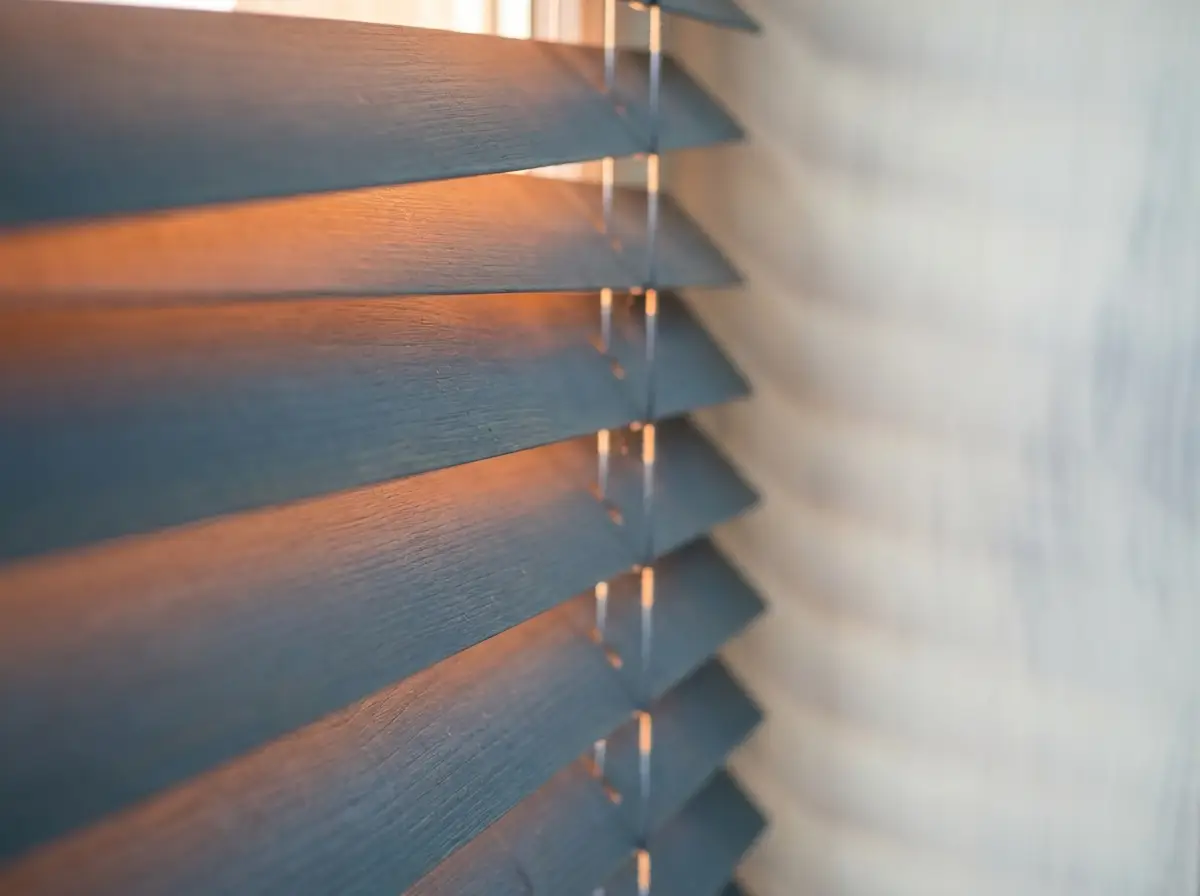
Pleated fabric forming hexagonal air cells in profile — trapped air is insulation, and that makes this the best thermal buffer of any interior blind, in both directions.
A Cape winter on Welgemoed's slopes brings weeks of grey, damp weather, and a Cape summer afternoon on the same window can run hot even with sunscreen fabric doing its job. Cellular blinds don't fight either extreme with brute force — they buffer it, the way a good jacket does, using trapped air rather than blockout alone.
Single cells suit milder rooms; double cells do the more serious thermal work — cooler in a hot spell, warmer on a cold morning, and quieter too, since the cell structure absorbs sound as well as heat. We'll keep the claim qualitative rather than promise a percentage nobody can back up: genuinely more comfortable, and easier on whatever's heating or cooling the room.
Top-down/bottom-up control gives privacy at the bottom with light and sky still visible at the top — useful for street-facing windows on the lower stands. Cordless and motorised operation are both available, and the stack is the slimmest of any blind when fully raised.
Cellular blinds sit above a flat fabric on price because the honeycomb is insulating as well as shading — useful on a slope house that swings from a hot afternoon to a cold evening. The installed rate is R1,500 to R2,800 the square metre corded or cordless, and R3,000 to R4,800 motorised. Double cells, blockout linings and top-down-bottom-up head rails all sit near the top of each band.
Narrow openings are charged at a minimum, because the head rail and the visit cost the same whatever the width. Use the bands to plan a budget; the number per window comes out of the free measure, in writing, before anything is ordered.
Fitting cellular blinds wherever a Cape winter or a hot afternoon needs buffering — Plattekloof, Durbanville, Kanonberg and the newer Durbanville Hills estates all get the same thermal treatment.
Free in-home measure, a written per-window quote, and an honest read on where insulation actually helps.